OPINION | Army Day Parade 2026, Jaipur: Epitome of whole of nation approach
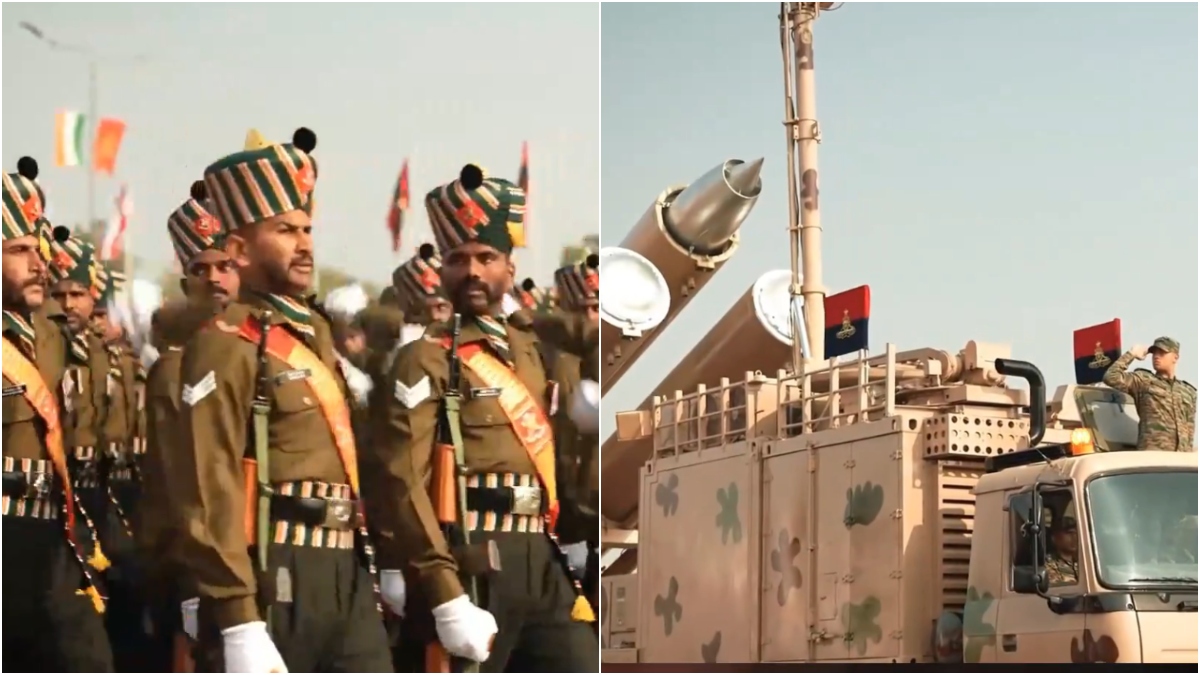
The 78th Army Day Parade, held on 15 January 2026 in Jaipur, Rajasthan, emerged as a landmark event that went far beyond being a ceremonial military display. Organised for the first time in the State of Rajasthan, the event became historic due to the manner in which it was taken to the people. Guided by the visionary decision of the Hon’ble Prime Minister, Shri Narendra Modi, the parade was not only conducted outside Delhi, as has been the norm since 2023, but was, in fact, conducted outside a Military Garrison for the first time in its history. This unique initiative by Lieutenant General Manjinder Singh, Army Commander, Sapta Shakti Command, led to the showcasing of the might of the Indian Army to a much wider audience. This contributed significantly to the pride and confidence that the nation can palpably feel in its capability to neutralise any threat to its sovereignty. Careful curation and planning of the venues, based on the nature of the event being hosted, brought multitudes in unprecedented numbers. As a result, people thronged Sawai Man Singh Stadium for Shaurya Sandhya, Bhawani Niketan Campus for the Know Your Army Mela, and Mahal Road for the Army Day Parade in unprecedented numbers. To begin with, the dynamic and inspiring senior leadership of the Indian Army and the State of Rajasthan needs to be acknowledged at the very outset, especially when an event of this magnitude has become a benchmark for others to emulate. The qualities of decisiveness, flexibility, courage, managerial acumen, vision and dignity were exemplified by both the military and political hierarchy. The initiative by Lieutenant General Manjinder Singh, Army Commander, Sapta Shakti Command, to take the parade to the people was itself an embodiment of all these qualities. The manner in which the political leadership thereafter catalysed strong institutional coordination, planning sessions and contemplations between South Western Command and the Government of Rajasthan was also unprecedented. The compelling case in support of this well-thought-out and carefully planned proposal received approval from the Hon’ble Raksha Mantri and the Chief of the Army Staff. The Hon’ble Chief Minister of Rajasthan, Shri Bhajan Lal Sharma, extended wholehearted support to the event, and once he took ownership of it, there was no looking back. The example set by the senior leadership of the Indian Army and the State of Rajasthan inspired subordinate functionaries to commit themselves fully to creating historic benchmarks of excellence. While the pomp and glamour of a military parade came across as the prime spectacle, the critical facet that truly emerged as the highlight was the manner in which the ‘Whole of Nation’ approach manifested itself. The synergy between all stakeholders, both from the Indian Army and the State Administration, set a benchmark in seamless coordination between those in uniform and those outside. It was proven beyond doubt that such synergy can act as a catalyst and a force multiplier across the entire spectrum of activities towards nation-building. This synergy will also play a similar role in the defence of the nation in times to come. It was especially heartening to note that the concerned departments in the State Administration were completely motivated, synchronised and geared up to perform the support tasks assigned to them. Exemplary coordination was witnessed between the Indian Army and the State Administration. Similarly, within the state and district administrative machinery, competence and complementarity were evident and worthy of emulation. The experience of hosting an event of this magnitude as a combined effort by the Indian Army and the Rajasthan State Administration brought to the fore numerous lessons pertaining to the effective application of the ‘Whole of Nation’ approach. The conduct of the Army Day Parade involved many functions that could be considered common to the conduct of events that may be even more sensitive in relation to military operations. Some important facets that were highlighted included the synchronised utilisation of military and civil infrastructure as a combined asset to accommodate operational and ceremonial requirements. The selected stretches of Mahal Road, Bhawani Niketan Campus and Sawai Man Singh Stadium were transformed into world-class ceremonial venues. Roads were reinforced to withstand the movement of heavy military equipment and mechanised columns, and adequate space was provided for the marching contingents. Additional structures such as audience galleries, media enclosures, control rooms and multipurpose halls were erected with precision and efficiency. Civic amenities were upgraded to cater for the large public turnout. Secretariats and agencies, including the PWD, Jaipur Development Authority and Jaipur Nagar Nigam, seamlessly integrated with the Indian Army at every level to fructify requirements in real time. Communication and reporting of updates and contingencies prior to and during each event were closely intertwined between the State Police, the Military Police and all other functionaries. This resulted in enhanced efficiency in decision-making and ensured timely and correct actions. The critical aspect of venue security was carried out jointly by all security agencies. This complemented and enhanced their combined capability to achieve complete domination and sanitisation of the venues. Various types of threats, including hybrid threats, were analysed, and the security arrangements for the parade reflected exemplary coordination between South Western Command and the State security apparatus. The Joint Intelligence and Surveillance Centre established by Sapta Shakti Command included stakeholders from Military Intelligence, Army Air Defence, Signals, the Airports Authority of India, Rajasthan Police Intelligence, electronic warfare agencies and traffic management agencies. Through the multi-layered security framework, continuous surveillance, safety and security of the event and thousands of spectators were ensured. All these endeavours were undertaken while maintaining the ceremonial dignity of the parade. An effective counter-UAS grid and an air defence matrix were also put in place. Other important aspects, such as traffic regulation, parking and access to venues, exemplified combined professionalism and efficiency, making the event easy for the public to witness. The Corps of Military Police, Traffic Police, District Administration and Municipal Authorities jointly designed a comprehensive traffic and parking management plan and issued detailed guidelines to the public on demarcated routes and dedicated parking zones. Finally, media coverage of each part of the event was so flawlessly coordinated that a cumulative audience of 5.6 crore people watched the event across different platforms. The State Government’s information and public relations apparatus worked closely with their defence counterparts to generate widespread awareness and enthusiasm. Exemplary coordination and interoperability were observed among the Information Warfare Branch of Sapta Shakti Command, the Public Relations Officer Jaipur, the Department of Information and Public Relations, the Department of Tourism, and the Central Bureau of Communication at Delhi and Rajasthan, as well as the State Public Relations Office. Coordination and cooperation with agencies such as DD Rajasthan, ANI, PIB and Akashvani resulted in wide public outreach. This media blitzkrieg across print media, television, radio, digital platforms and social media channels rapidly disseminated information regarding the parade schedule, seating arrangements and entry procedures. This helped transform the parade into a truly participative event, drawing attendance from students, youth organisations, veterans and citizens from across Jaipur and neighbouring districts. The State Department of Education also facilitated the presence of schoolchildren to witness events at multiple venues. The tenets of the ‘Whole of Nation’ approach reaffirmed by the grand event included coordinated planning and preparation, rapid identification and sharing of assets, and mutual trust and confidence. These endeavours were further strengthened through effective mitigation of contingencies, synergised initiative and application at every level, commonality of objectives, uniformity in processes and procedures, and a shared commitment to excellence. More than 15 lakh citizens witnessed the parade in person, while millions more engaged with the celebrations through digital and social media platforms. Similarly enthusiastic crowds gathered to witness the static and dynamic equipment displays and the patriotic showcase of Shaurya Sandhya. The city experienced a moment of collective awe as 1,000 drones illuminated the evening sky, creating a striking visual narrative of nationalism, martial traditions and bravery. Beyond its historical and ceremonial significance, the Army Day Parade 2026 reinforced the values of trust, unity and shared responsibility between the armed forces and civil society. It stood as an epitome of the ‘Whole of Nation’ approach, reflecting the combined efforts of the Indian Army, the State Government, local administration, media and citizens. Together, these noble endeavours resulted in a mega event that resonated with national pride and the spirit of unity. The opinions expressed in this article are those of the author and do not purport to reflect the opinions or views of THE WEEK.